Archive for the ‘News’ Category

Tajikistan Disaster Management

Sunday, June 6th, 2021


Global Partners Tajikistan began responding to natural and man-made disasters in 1998.

Our Disaster Management Team (DMT) was involved in helping a village in the Badakhshan province of Northern Afghanistan recover from a flood that washed away four homes and 23 flour mills in the summer floods of 2005. The team provided material to the villagers so they could rebuild their mills and over half a kilometer of water canals. The DMT also finished a rebuilding project in cooperation with Shelter For Life in Ghalaba in the Khatlon Province. Forty-eight homes were constructed by the villagers themselves to replace homes washed away in rainstorms in June of 2005. The DMT followed up this project with disaster preparedness training emphasizing better home designs that will help them withstand extreme weather in the future.

More recently, GP aid workers from our Panjikent office responded to Tajik people affected by flooding in the Zarafshan Valley in 2010:

“We distributed 190 bags of flour to flood victims and gave out cement to help rebuild houses that were destroyed in the flood,” the GP worker reported. In the same town, an ongoing food kitchen project provided more than $20,000 worth of lunches for the poor and sick.

Global Partners quickly aided villages throughout the valley and:

• Built a bridge near the village of Rovadin to facilitate continuation of transportation and commerce
• Repaired a drinking water line in Zosun village that had been destroyed in a flood
• Constructed desks for the local school in the village of Voru
• Conducted a river bank enforcement project in Maikata, to protect the village from future flooding

After the flash floods of August 2010 that hit the town of Gharm and the villages of Navdi and Shul, Global Partners aid workers cut down and removed dead trees, provided diesel to clear roads and purchased water pipes to restore drinking water. GP rebuilt a foot-bridge to restore access to neighborhoods, and dug a canal where the river used to be.

Training Nurses Bolsters Health Care in Rural Afghanistan
Tuesday, April 6th, 2021


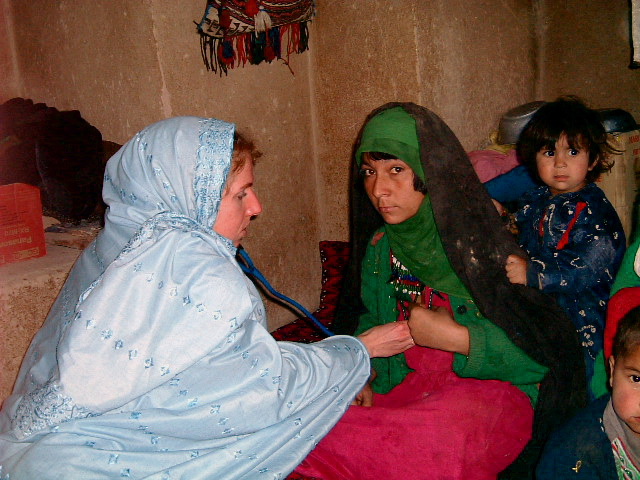
GHOR PROVINCE, Afghanistan (GP) — Axon, dendrites, myelin — strange words squeak across a whiteboard as Heather Edwards* labels a crude drawing that resembles a Medusa-headed alien from Star Trek. But this apparent work of science fiction is actually much more down to earth. Edwards, a registered nurse from the United States, is teaching a class on the human nervous system. Her cryptic words are parts of a neuron, the nervous system’s basic building block.

Through a project supported by Global Partners (GP), Edwards’ students are on track to become part of Afghanistan’s next wave of health care professionals, some of the first formally educated nurses serving in Ghor province.

“What are the names of some neurotransmitters?” Edwards asks the room of about 20 young Afghan students. One cautiously slips up his hand and answers correctly. “Very good!” she replies with a reassuring smile. Though health care in Afghanistan is steadily improving, Edwards knows that many people are still in desperate need, particularly in rural, isolated areas. That is why she has come to Ghor. When GP officially launched the nurses’ training program two years ago, Edwards says there were only about 35 nurses for the entire province of more than 600,000 people. None were formally trained.

“This is the only [government] hospital in the entire province, so when people come here they are usually very, very sick,” Edwards says. “But if you have a nurse who doesn’t know what they are doing, many times they do more harm than good. And because of the lack of doctors in the hospital, nurses run emergency rooms and the hospital at night if a doctor isn’t available.

“I’m hoping these classes will give them more knowledge to make good decisions. It’s a start, but we have a long way to go.”

Edwards’ class is unique. Not only will this be Ghor’s first group of home-grown, licensed nurses, but the training program features the first two female nursing students in the history of the province. Nadia,* 20, wants to work in pediatric nursing when she completes her training. She’s already spent nine months in the emergency room and says she wanted to become a nurse to help her people.

Funded by GP, the training program is based at Ghor Provincial Hospital, where most of Edwards’ students, like Nadia, already work as nurses.

“It’s very similar to a two-year nursing program in the U.S.,” Edwards explains, though not as strenuous. “They’re starting from a lower level. Their high school education is so poor that they’re having to learn a lot of things that we take for granted, like basic math skills to figure out dosages of medications.”

CHALLENGES

There are other challenges, too. Edwards developed all of her own lectures because the nursing school has no textbooks. Even if they did, Edwards isn’t sure her students would use them. Rather than absorbing knowledge by reading, she says most of her students are oral learners.

But the biggest obstacle, Edwards adds, is simply getting the students to come to class. Ghor’s nursing shortage means that Edwards’ students may be scheduled to work a shift at the hospital during class time. Students’ responsibilities at home also hurt attendance.

“If they have company at their house, they don’t come to class. If they need to go home to their village and harvest wheat, they go home,” Edwards says. “We’re still living in an agrarian society where everything else comes before any kind of schooling.”

“They have to choose to come to class. My challenge is trying to keep coursework relevant enough to what they’re doing at the hospital that they want to come to class.”

Despite those hardships, Edwards doesn’t let her students slide. “I think they’d tell you I was hard. They don’t like my tests, but they’re proud of themselves when they pass them,” she says.

STUDENTS’ GROWTH

Edwards’ high standards combined with her students’ hard work, is paying off.

“I’ve seen changes in every single one of them,” Edwards says. “They’re seeing there’s more reason to be in this class than just to better themselves. There’s a purpose for it. They want to help the Afghan people.”

The hospital’s doctors are seeing the changes, as well. The level of nursing care is improving. Students are asking more intelligent questions while on rounds. Some students, like Abdul,* seemed destined to fail Edwards’ nursing course before he even began, but have experienced amazing growth.

“When he walked in the class last semester, I thought there is no way he’s going to make it,” Edwards says. “He’d come straight in from the village. … He was so proud. He didn’t think he could learn anything because he knew everything. But he stayed with it, and he’s done very well. His grades got better and better. Now he’s probably fourth or fifth in the class.”

PERSONAL REWARD

And it is seeing those kinds of transformations, Edwards says, that makes her job so rewarding.

“They’re like my sons and daughters now,” she says of her students. “I know them so well. I love every one of them. I get frustrated with them, but I also have so much hope for the difference they can make in the health care in this province. They know I’m fair, and they know I care about them.”

Edwards personally funded the nursing school the first year, spending more than $12,000 to get it off the ground. GP adopted the program after seeing its potential and the need for steady financial support.

NURSES TEACHING NURSES

Edwards dreams of a permanent nursing school in Ghor that’s not only attended, but taught by Afghans. The demand is there. Right now the school can only accept 25 new students each year. There are more than 100 on a waiting list. That’s why Edwards is training a few of her brightest second-year students to begin teaching a new class of first-year students.

“It’s important for them to be able to continue this without me here, so they can build their own school and be proud of what they’re building,” Edwards says. “They understand their culture, they understand the equipment they have, they understand the problems, and I think they can do it better than I can.”

*Name changed

Jim Durham is a freelance writer based in the United States

Shepherding Project Lifts Afghan Families From Poverty
Saturday, March 6th, 2021


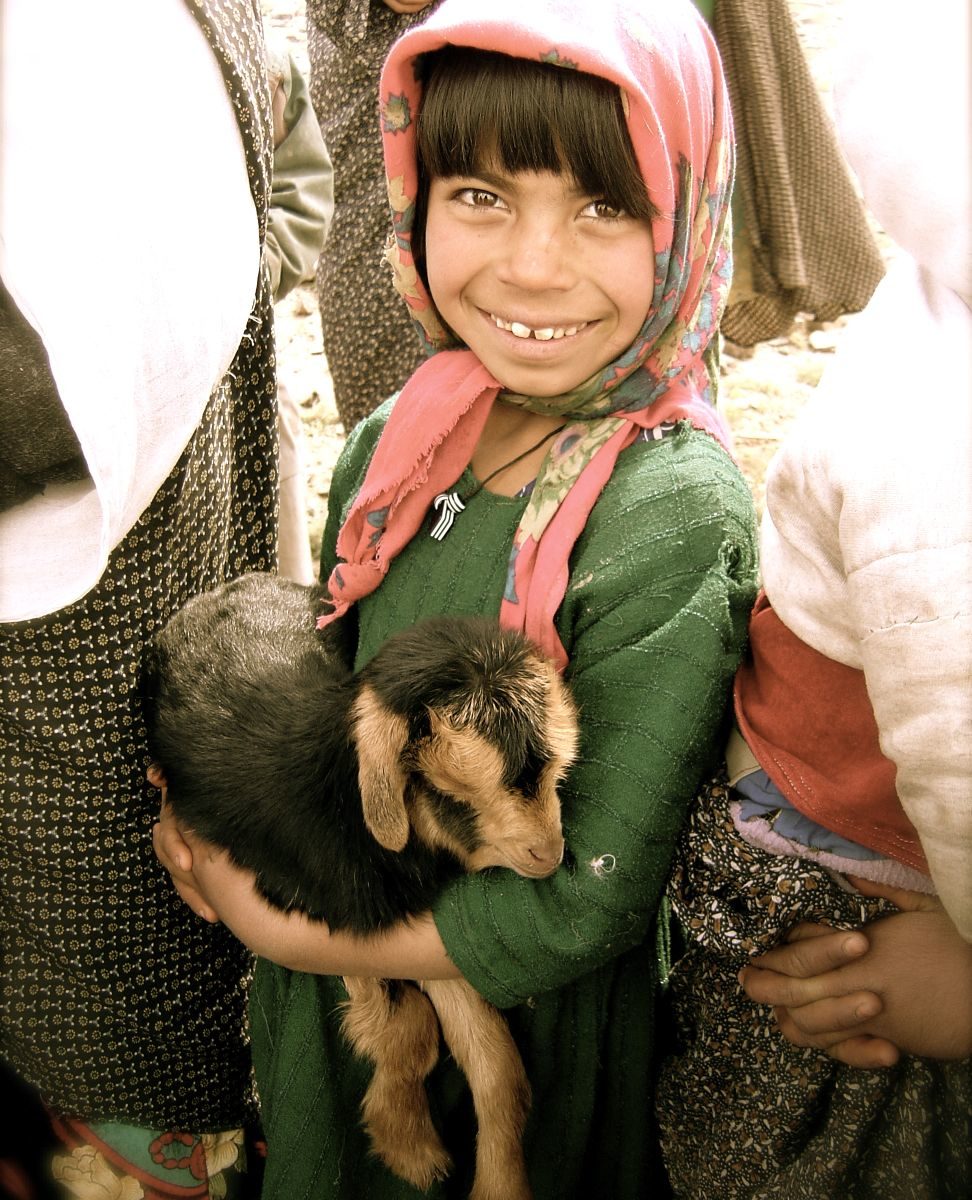
SHERABAD, Afghanistan (GP)—In a small village in northern Afghanistan, Aq Mohammed keeps a watchful eye over a flock of sheep. Somewhere in the mud-walled pen holding a sea of white, brown and black wool are two ewes of particular importance to the 52-year-old father of seven. That’s because they aren’t just sheep — they’re a lifeline for his struggling family.

Mohammed’s is one of 13 Afghan households involved in a community development project facilitated by Global Partners (GP). Focused on micro-enterprise animal husbandry, the project helps impoverished families build their own small businesses by training them to raise sheep. GP “seeds” each family’s venture by loaning them two ewes, the foundation from which they can build their personal flock. Mohammed says the project has given him new hope for his family’s future, which, until recently, looked grim.

Like many Afghans suffering under the country’s war-crippled economy, Mohammed lives well below the poverty line. His household’s average annual income is less than $500. With no education or land to farm, he is forced to work as a day laborer, earning only $3 to $4 a day. The money must feed, clothe and house nine people, including Mohammed and his wife.

Worse, four of the couple’s children are severely physically and mentally challenged. One of Mohammed’s sons, a man who appears to be in his early 20s, leans against the wall of the sheep pen staring vacantly at the sky. His thin legs stretch out in a twisted pile across the dirt and sheep droppings. The young man must drag himself from place to place; a wheelchair is a luxury the family simply can’t afford.

Kevin is a GP field worker who oversees the shepherding project. He says it’s already helping lift families like Mohammed’s out of poverty.

Working in partnership with local leadership, GP began by purchasing two ewes for each of the 13 families that village elders selected for the project. Over a two-year period, the families were taught how to feed, clean, vaccinate and grow their flock. GP provided two rams for breeding, and births are tracked and attributed to respective families’ ewes via an ear-tagging system.

But this isn’t a handout. The families and the community must contribute to the project, too. In addition to providing all the day-to-day care for the sheep, the 13 families must also grow and harvest alfalfa, a key part of the flock’s diet. The village donated the land to farm the alfalfa as well as the property to house the sheep.

“We don’t want to only give handouts because, if I give you food today, then tomorrow you’re hungry again and I haven’t really done anything for you,” Kevin says. “But if we can help you help yourself — teach you things that are going to improve your health, improve your community and your standard of living — that’s what GP wants to accomplish.”

Kevin says that two sheep may not sound like a lot, but at an average sale price of $200 per ewe, GP’s loan essentially doubles each family’s annual income. As “payment” for the families’ work, they also receive monthly food stipends including oil, rice and flour, as well as supplemental feed for the flock. In addition, the sheep themselves provide an immediate flow of resources and income.

“We can sell the milk and wool,” Mohammed says. Families also use sheep droppings as fuel for cooking and fertilizer for the alfalfa fields.

Best of all, Kevin says, the shepherding project is self-sustaining and reproducible. At the end of the two-year training program, multiplication of each two ewe “mini-flock” will add between eight and 12 new sheep per family. Participants “graduate” after paying back the balance of their loan.

“Their responsibility is to give GP back two healthy sheep — the rest are theirs to keep,” Kevin explains. “And we’ll recruit another family into the co-op and give the two sheep to them, so the co-op is constantly growing.”

As their flocks continue to grow, families can begin using the sheep’s meat, too, or selling it at local markets — much more lucrative than milk or wool.

“Now we know how to take care of the animals, and we can give them vaccinations,” Mohammed says. “We will keep our sheep and increase their numbers to support our family.”

Kevin believes the project has given the Afghan father genuine hope for the future. “A lot of people here, they’ve been fighting for 30-plus years now, and they just don’t think their future’s going to get any brighter, you know?” he says. “But now Mohammed sees that he will finally be able to provide for his family.

“We’re not here just for a job,” Kevin adds. “We’re here to see lives changed for the better.”


Jim Durham is a freelance writer based in the United States

Tajikistan Water Projects

Saturday, June 6th, 2020


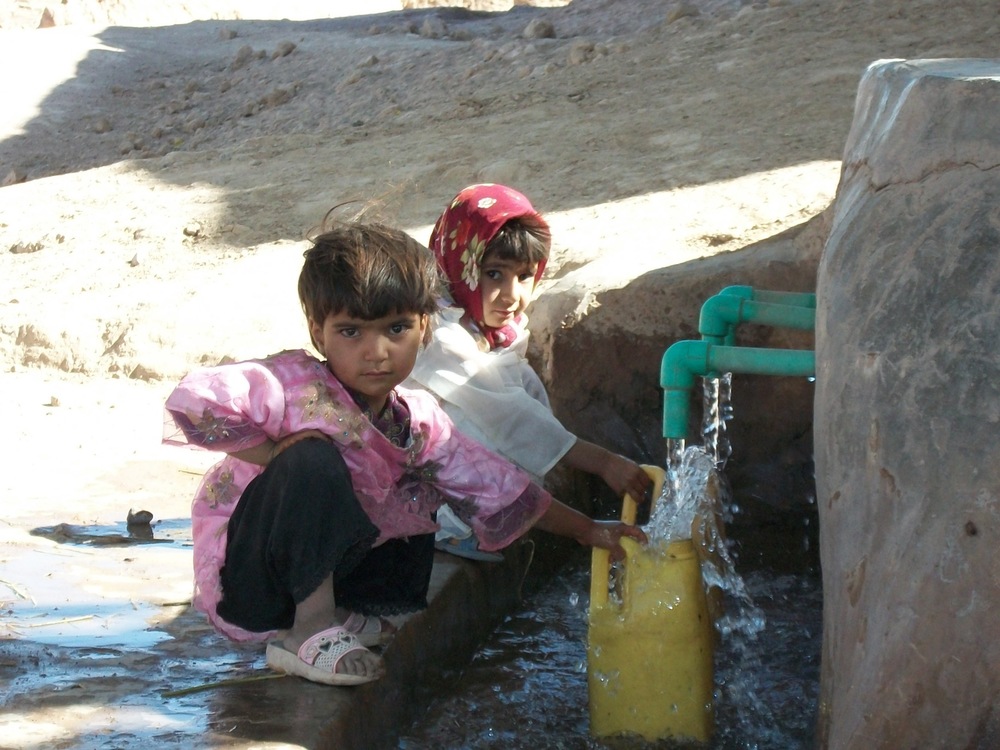
In Tajikistan, many people now have access to clean drinking water because of Global Partners.

“The 2010 well-digging project in Shartuz District created six clean drinking water wells and is an ongoing project,” one GP worker said. “The project has benefited over 1,000 people so far. We will continue the well project in Khatlon Region expanding our operations to many more villages.”

A recent irrigation project in the village of Shahidi Bobohon of Khatlon Region benefitted 800 people who rely on crops from the fields surrounding their village. And a water project provided natural spring water to the 600 people of Takob village (Varzob District).

In the arid Zarafshan Valley, Global Partners conducted drinking water projects in the Yovon Aini region and in the village of Revad. To ensure that local villages in the Hadishar and Mastcho region could grow vital crops for their families, GP provided pipe to repair a much needed water line for irrigating fields and trees.

GP is always looking for sustainable ways to get water to thirsty mouths and dry fields. In the village of Safed Hok, GP provided a water wheel to a farmer as a test model. The design of this project is to help farmers by moving irrigation water from canals and rivers to higher ground. GP also purchased and installed 5km of water pipe to this village, providing 20 homes with drinking water. Another 150 homes benefited from drinking water received from 5km of water pipe that GP installed to the nearby village of Belgi.